OpenAI Built a Chip. Your Agent Economics Just Changed.
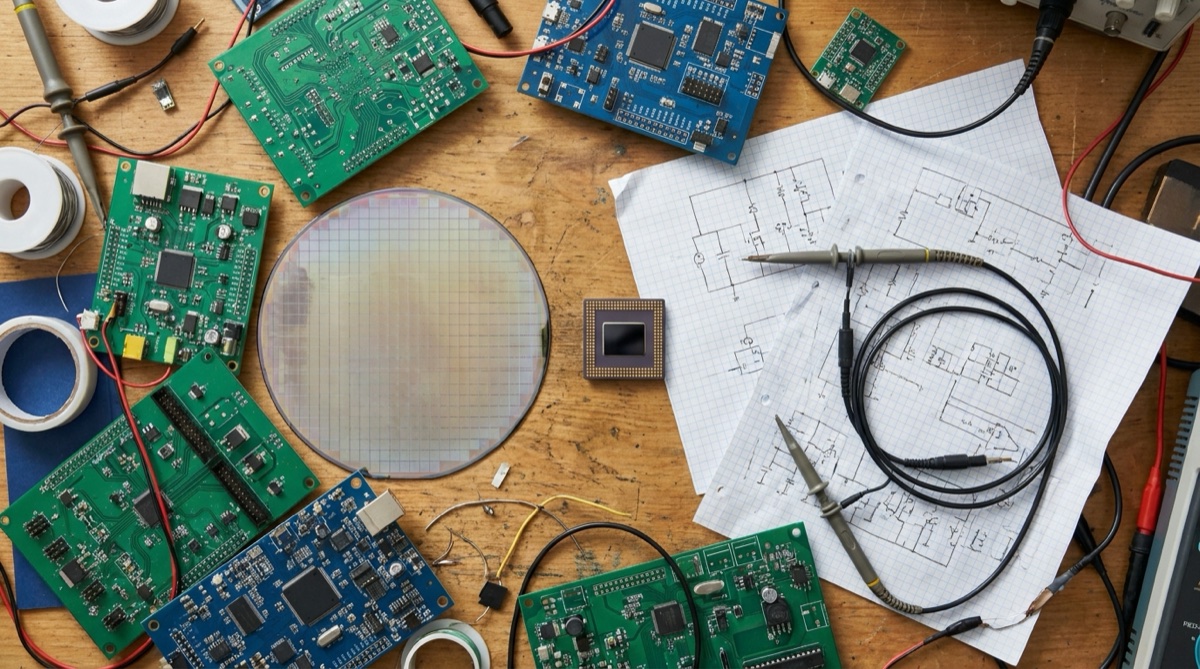
OpenAI just showed off its first custom chip, built with Broadcom. For anyone running AI agents in production, this changes how you architect systems. The cost curve is shifting.
When a lab designs its own inference silicon, the marginal cost per token drops structurally. General-purpose GPUs are inefficient for transformer math. A chip built for the specific operations your model runs removes waste at the silicon level. Less power, less cooling, lower cost per token served. That savings hits your API bill, or it pads OpenAI's margin. Either way, running dozens of parallel agent calls per user interaction gets cheaper.
Why this matters for agent builders specifically
Agent architectures burn tokens in ways chat applications don't. A single user request might trigger planning, tool selection, sub-agent calls, context retrieval, and final synthesis. We regularly see 10-50x the token consumption per user interaction compared to a basic chatbot. That multiplier is why agent-based products struggle to reach economic viability at scale.
Cheap inference doesn't fix everything, but it fixes the thing that kills most agent projects: unit economics. You can't build a $9/month product if a single customer interaction costs $0.50 in API calls. At $0.02, you can.
At Kerber AI, we build agent systems for our own ventures and clients. The first conversation we always have centers on the token budget per user session. That budget dictates how many agents you can chain, how much context you can pass between steps, and whether you can afford a reflection loop. A 3-5x reduction in inference cost makes existing designs cheaper and unlocks architectures that were previously too expensive to run.
The catch: deeper stack lock-in
Vertical integration carries a trade-off. When a model provider owns the chip, the model, the API, and the application layer, switching costs go up. If OpenAI's custom silicon lets them offer the cheapest inference for GPT-class models, teams that optimize heavily around OpenAI's specific API surface and tool formats will find it hard to leave.
This is why we obsess over abstraction in our agent stack. You need to swap the inference provider without rewriting your orchestration logic. If Anthropic releases a better model for your use case, or an open-weights model becomes viable for a specific sub-agent, you want that to be a configuration change, not a rebuild. The ability to walk away gives you negotiating power.
The teams that will benefit most from OpenAI's chip are those who build agnostic systems. They capture the cost savings where they exist without getting trapped when the next silicon announcement comes from a different lab.
What to actually do right now
If you're shipping agents today, start here:
- Audit your token-per-interaction cost. If you don't know what a single user session costs in API calls, you can't evaluate whether cheaper inference changes your product strategy. Measure it this week.
- Identify the designs you shelved for cost reasons. Multi-agent reflection loops, longer context windows, and parallel exploration paths become viable at lower price points. Revisit them.
- Insulate your orchestration from your inference provider. The cheaper inference gets, the more providers will compete on price. Position yourself to capture that without rewriting your agent logic.
Custom silicon is a long game. The chip OpenAI just showed won't be in production tomorrow. But inference is getting cheaper faster than most teams have planned for. The agent architectures that win will be designed to exploit that curve, not priced for 2023 token costs.
Want more? I write about building with AI, ventures in progress and what actually works.
No spam. Unsubscribe any time.
Are your agent economics ready for cheaper inference?
Kerber AI designs and ships production agent systems — we'll help you architect for the cost curve, not against it.
Let's talk