GPT-5.6 Sol Is Here. The Government Decides If You Get It.
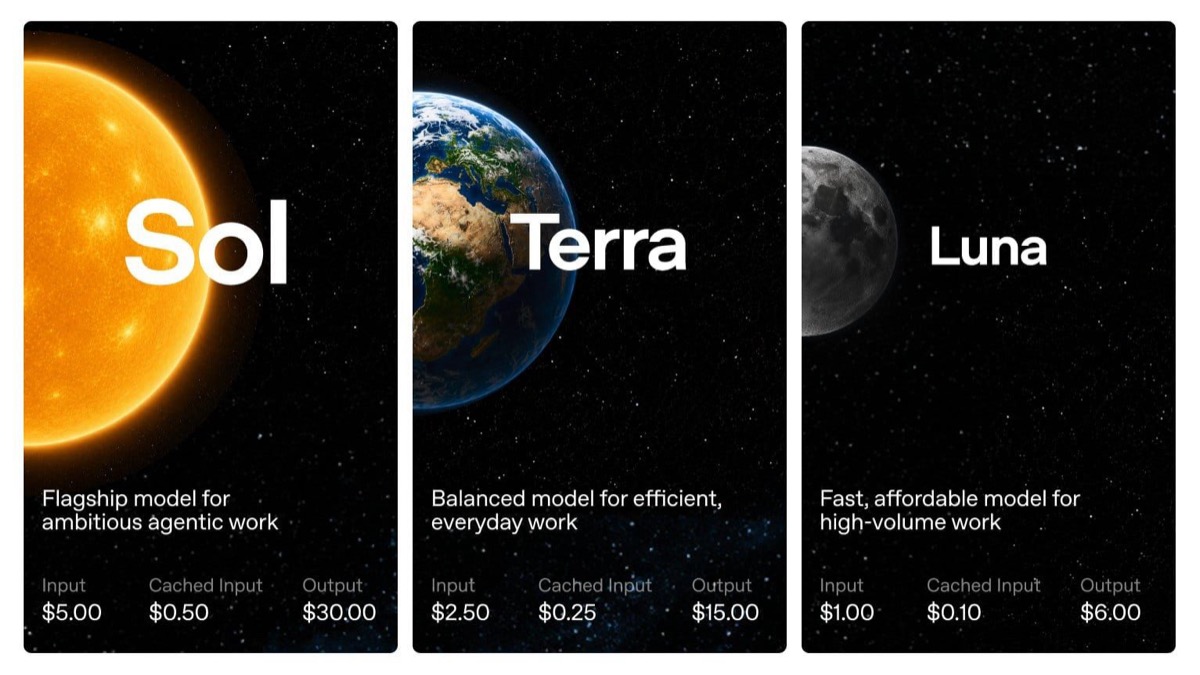
Image: OpenAI
OpenAI showed off GPT-5.6 Sol this week. The model is a real step up. It reasons better, uses tools more effectively, and performs well enough that you might want to rip out your current setup and swap it in. But the headline that should stop you is the other one: the U.S. government will decide who gets to use it.
This isn't a licensing deal or a compliance checkbox. A gatekeeper now sits between your agent stack and the model it relies on. If you build production systems that route real work through a frontier model, you just picked up a dependency you cannot negotiate with.
What "government decides access" actually means
We are used to model access being a commercial relationship. You pay OpenAI, you get GPT. You pay Anthropic, you get Claude. Terms change, prices shift, and rate limits bite, but it remains a vendor relationship. You can plan around it.
GPT-5.6 Sol changes that frame. When a government agency decides who can use a frontier model, access becomes a regulatory question rather than a procurement one. You face eligibility criteria, review timelines, and potential classification of use cases. Critically, your use case might get denied or delayed for reasons that have nothing to do with your product or your customers.
For a venture we are building that runs multi-agent workflows across research, synthesis, and content generation, a model access denial would not be a minor inconvenience. It would be an outage with no SLA and no escalation path. The model is not down. You are just not allowed to call it.
Your agent stack needs political redundancy
Most teams building with AI agents already know how to handle model-level failures. If a provider has an outage, you fall back. If a model degrades on a specific task, you reroute. These are operational problems with operational solutions.
Government gatekeeping is a different failure mode. It is not transient. You cannot wait it out. If your entire agent architecture is welded to a single frontier model and that model's access gets restricted, you are not debugging. You are rebuilding.
Here is what we are already doing across the agent systems we run, and what I would recommend to anyone shipping production agents right now:
- Model portability from day one. Your orchestration layer should treat models as swappable. If swapping Claude for GPT for Gemini requires rewriting prompts, tool schemas, and evaluation harnesses, you do not have portability. You have a hostage situation.
- Run parallel model tracks. Do this as a default, not as a fallback. Route different agent tasks to different providers based on what each model is actually best at. This provides better economics, but the resilience is the point here. If one model's access gets cut, the other tracks keep running.
- Know your open-weights contingency. The gap between open-weights and closed-source models is real but narrowing in specific task domains. For a defined agent workflow, not general chat but a specific pipeline with constrained inputs and outputs, a well-tuned open-weights model can carry the load if a frontier model becomes inaccessible. You need to know which of your tasks this applies to before the access decision comes down.
- Separate the model from the system. Your agents' value is not the model. It is the orchestration, the tool integration, the evaluation loops, the memory, and the guardrails. If you built those well, a model swap is a configuration change. If you built them poorly, a model swap is a rewrite.
The new risk surface
Every time a new dependency enters your stack, it adds risk. Government access decisions are now a dependency. You cannot remove it. You cannot negotiate it. What you can do is architect around it. Build systems where no single model's availability is load-bearing for the entire product.
This is the work. You are not just picking the best model. You are building systems that survive when the best model becomes unavailable. The teams that figure this out will ship through access restrictions, regulatory shifts, and whatever comes next. The teams that do not will be on a support ticket that no one can answer.
Want more? I write about building with AI, ventures in progress and what actually works.
No spam. Unsubscribe any time.
How resilient is your agent stack to a model access cutoff?
Kerber AI builds and operates multi-model agent systems designed to survive provider outages, access restrictions, and regulatory shifts — for our own ventures and for client companies.
Let's talk